
CELEBRITY
BREAKING: The Venezuela War Powers Resolution has officially failed in the U.S. Senate. In a dramatic moment on Capitol Hill, the vote deadlocked at 50–50—until Senator J.D. Vance stepped in, breaking the tie on a key point of order and effectively discarding the resolution. What makes this decision even more explosive is public sentiment: nearly 70% of Americans oppose this war. Yet despite overwhelming resistance from voters, Congress appears determined to push forward. Now, attention is turning to what lawmakers are insisting on next—and why many Americans are wishing, hoping, and watching closely for what this could mean for J.D. Vance and Donald Trump.

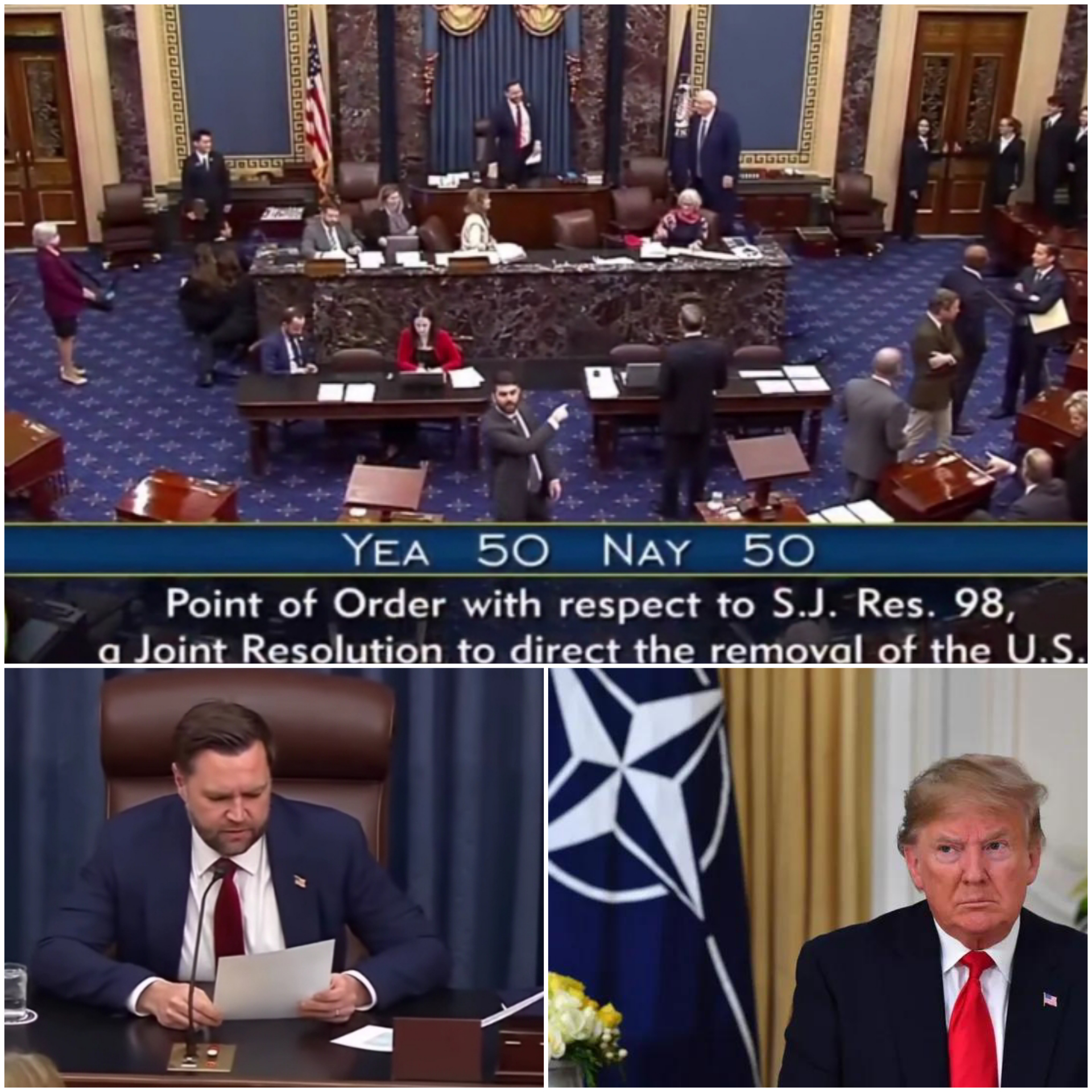
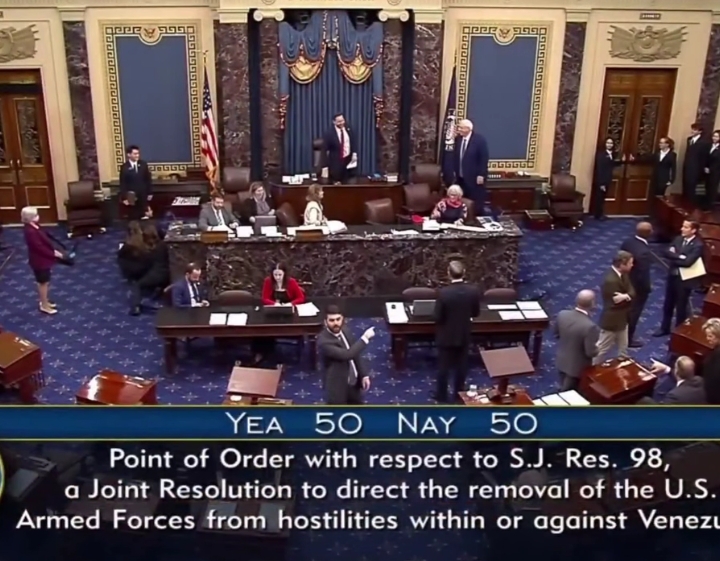
In a closely watched procedural showdown on Capitol Hill, the U.S. Senate effectively killed a bipartisan War Powers Resolution that would have required President Donald Trump to seek congressional approval for any further military action in Venezuela.
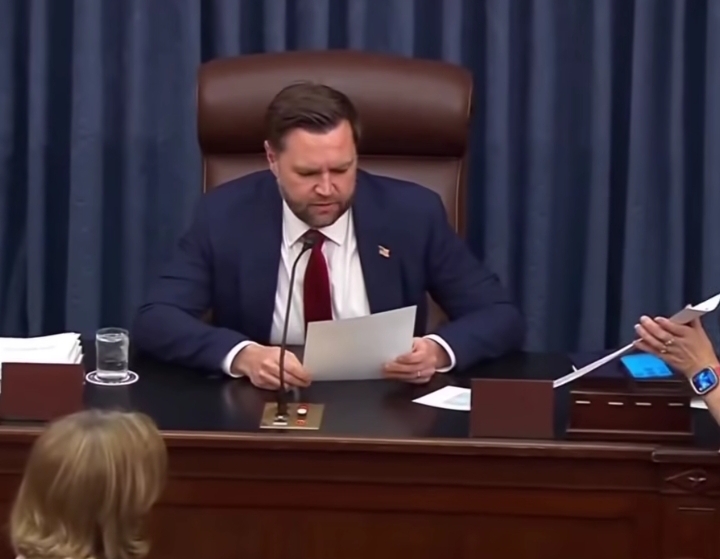
The measure failed after a dramatic 50-50 deadlock, broken by Vice President J.D. Vance, who cast the decisive tie-breaking vote in favor of a Republican point of order to dismiss the resolution.
The resolution, sponsored by Sen. Tim Kaine (D-Va.), aimed to curb the Trump administration’s authority following a high-profile U.S. military operation earlier this month that captured Venezuelan President Nicolás Maduro. It had advanced last week with unexpected support from five Republican senators, marking a rare bipartisan rebuke of the president.
However, intense lobbying from the White House—including direct outreach from Trump and Secretary of State Marco Rubio—prompted key defections.
Sens. Josh Hawley (R-Mo.) and Todd Young (R-Ind.) flipped their positions after receiving assurances that no U.S. ground troops would be deployed and that Congress would be consulted for any major future operations.
Republicans argued the resolution was unnecessary, as the administration maintains no ongoing “hostilities” exist in Venezuela, with the Maduro capture framed as a limited law enforcement action tied to narcoterrorism charges. The procedural vote passed 51-50, sidelining the measure and preserving the president’s flexibility.
Public opposition to deeper U.S. involvement in Venezuela remains significant, with recent polls showing a majority of Americans wary of expanded military engagement—often by margins of 25-50 points—amid concerns over another prolonged foreign conflict.
The outcome strengthens Trump’s hand on foreign policy early in his term, but it has intensified debate over congressional oversight of military actions.
Attention now shifts to potential next steps in Venezuela, including U.S. oversight of the country’s oil resources and governance, as well as implications for Vance’s role as a key ally to Trump in high-stakes Senate battles.
Many Americans are watching closely to see how this decision shapes the administration’s broader agenda in Latin America.

Breaking News: Paris Jackson, Michael Jackson’s only daughter, finally spoke out after 20 years of silence. And our suspicions were right… Read more

Taylor Swift Stuns in Purple Evening Gown at Surprise Red Carpet Return

Taylor Swift Just Made a Decision Nobody Saw Coming — Even Her Closest Fans Are Shocked. Find Out More

See the Unique Detail Fans Noticed as Taylor Swift, Jason and Kylie Kelce met Laila Edwards at the Olympics today

SHOCKING: Taylor Swift’s 2026 Winter Olympics Outfit Has Stylists SCREAMING — “This Was NOT Approved”

5 MINUTES AGO: In NYC, Taylor Swift and Travis Kelce was Involved in a Serious…

Fans Can’t Stop Talking About Taylor’s New Hairstyle and Noticeable Weight Gain at the 2026 Winter Olympics

10 MINUTES AGO: In Milan, Italy, Jason and Kylie Kelce was confirmed to be involved in a…

Fans Spot ONE Detail in Taylor & Travis’ Latest Appearance — And It Changes Everything. Look Closely

Taylor Swift and Travis Kelce Just Did Something NOBODY Expected Last Night — Fans Are Losing It. See What Happened

Patrick Mahomes Shares a Rare Behind-the-Scenes Family Moment — The Internet Is Obsessed
